Marketplace: From Useful Things to Lasting Good
11 min read · 2026-09-05
Opens the setup wizard. Sign in first if needed. Marketplace/Garage Sale is created by an organization administrator; members then add donated items.

The Things We Own Can Serve a Greater Purpose
The first Christians understood stewardship as more than giving money from what remained after every other need had been met. They looked at everything they possessed and asked how it might serve their brothers and sisters.
The Acts of the Apostles describes the Church in Jerusalem as being “of one heart and one soul.” Those who owned property sometimes sold it and placed the proceeds at the apostles’ feet so that assistance could be given where it was needed. St. Luke writes:
“There was not a needy person among them.” — Acts 4:34
This passage does not require Christians to sell everything they own, nor does an online Marketplace reproduce the communal life of the apostolic Church. It does, however, reveal an enduring principle: material possessions can be freely transformed into help for a common work.
Most homes contain useful things that are no longer being used: a table stored in the basement, tools left after a move, children’s equipment that has been outgrown, books that deserve new readers, or an appliance replaced while still working.
Individually, these objects may seem unimportant. Together, they can generate meaningful support for a parish campaign.
The Marketplace turns donated items into fundraising resources for your parish. Members list useful possessions, supporters purchase them online, and every payment goes directly to the selected organizational campaign.
A chair becomes part of a roof repair. A set of tools helps build a classroom. A box of books contributes to an accessibility ramp.
Nothing flashy is required. Good stewardship often begins with simply noticing what is already in our hands.
What Is Marketplace?
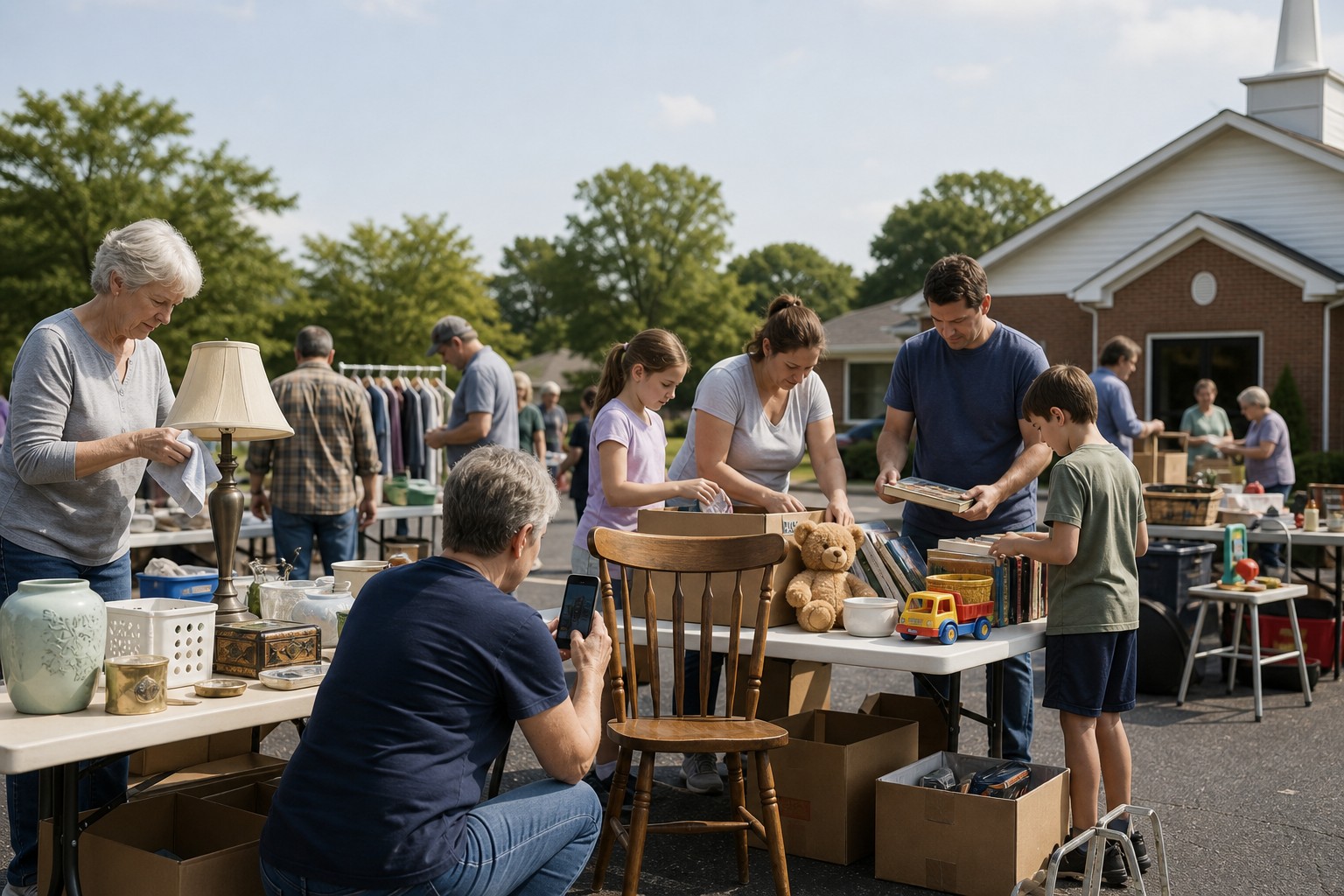
Marketplace is an online charitable sale connected to a fundraising campaign of your parish.
Members of the organization contribute items they no longer need. Each item receives its own listing with photographs, condition, description, price, pickup information, and other relevant details. The organization reviews the listing before it becomes public.
Supporters browse the catalog, purchase available items, and receive the private pickup instructions after payment. The contributor and buyer can then confirm that the item has been handed over and collected.
The money does not pass informally between buyer and seller. It is credited directly to the selected parish campaign.
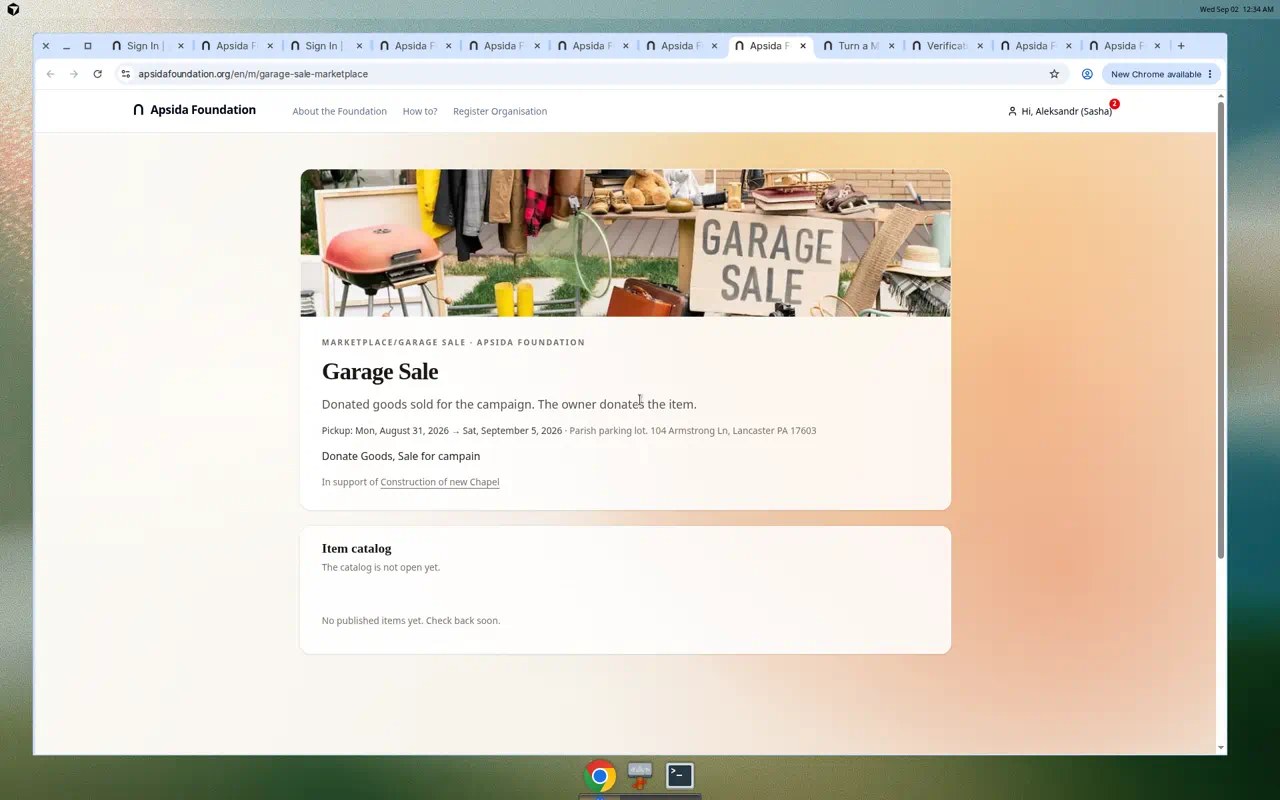
Marketplace can operate as a continuing online catalog or as a time-limited Garage Sale, Spring Marketplace, Parish Treasures Sale, or another themed event.
Why Marketplace Can Be Effective
Marketplace allows people to support a campaign even when they are not ready to make an additional cash gift.
The contributor gives an object. The buyer receives something useful. The parish receives the proceeds. A possession that might otherwise remain in storage becomes part of a common mission.
The mechanic also reaches people beyond the parish directory. Someone may discover the sale while looking for a desk, bicycle, garden tool, book collection, or child’s item. The purchase introduces that person to the parish and its project.
Marketplace works best when it feels curated and trustworthy. It should not become a digital dumping ground. A smaller catalog of clean, useful, accurately described objects will generally produce better results than hundreds of uncertain items photographed in dark garages.
What Can Be Listed?
Good Marketplace categories include:
- furniture;
- home and kitchen;
How a Member Adds an Item
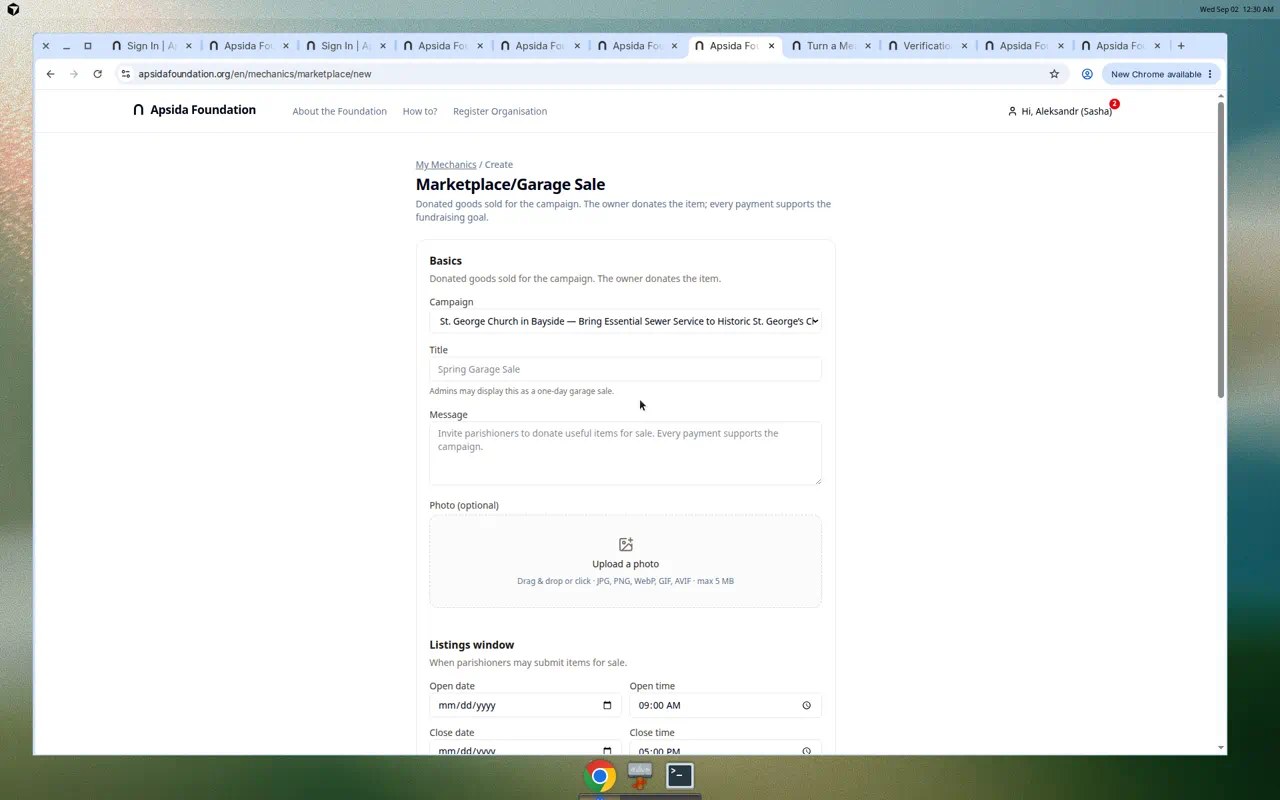
A contributor signs in, opens the Marketplace, and selects Add an Item.
The listing form asks for a title, category, short summary, full description, condition, known defects, quantity, price, dimensions, photographs, and pickup arrangements.
The contributor may select one of three pricing methods:
Fixed Price establishes one price for the item.
Name Your Price allows the buyer to choose an amount at or above the required minimum.
Fixed Price or More establishes a base price while allowing the buyer to contribute more to the campaign.
Photographs can be uploaded by selecting files or using drag and drop. The contributor chooses the cover image and arranges the remaining photographs in a carousel. Horizontal and vertical images should remain fully viewable in the gallery.
The exact pickup address and contributor’s contact information remain private until the item has been purchased.
How Buying and Pickup Work
The buyer opens the Marketplace, filters the catalog, and selects an item. The listing shows its photographs, condition, defects, dimensions, public pickup area, price, and remaining quantity.
During checkout, the item is temporarily reserved. After payment is confirmed, a unique item becomes unavailable to other buyers. When several identical units exist, the available quantity decreases automatically.
The buyer receives the contributor’s or coordinator’s name, telephone number, email, exact pickup location, and collection instructions. The contributor receives the buyer’s contact information and order number.
After the exchange, the buyer selects Confirm Item Picked Up, while the contributor selects Mark Item Handed Over. Either party may report a pickup problem to the organization administrator.
Twelve Ways to Build a Successful Marketplace
1. Open with several strong items
Do not promote an empty catalog. Begin when visitors can already browse at least ten clean, useful, varied listings.
2. Choose a theme when possible
A Spring Home Refresh, Tools and Garden Sale, Books and Music Marketplace, or Children’s Marketplace gives contributors direction and makes promotion easier.
3. Photograph every item in daylight
Use a clean background and show the front, sides, details, labels, and defects. Good photographs build confidence and cut down on unnecessary questions.
4. Describe condition honestly
Never hide a scratch, missing part, stain, or malfunction. A buyer who knows exactly what to expect is far more likely to complete pickup happily.
5. Include measurements
Furniture, rugs, frames, appliances, and large equipment need width, height, depth, and approximate weight. Buyers must know whether the item fits the room and the vehicle.
6. Price for movement
The goal is to support the campaign, not preserve the original retail price. Compare local secondhand listings and choose a fair amount that encourages timely purchase.
7. Bundle smaller goods
Group books by subject, dishes as a set, children’s clothing by size, or related tools as one lot. Bundles reduce administrative work and increase the value of each order.
8. Feature one item at a time
A post about “A solid oak dining table supporting our parish roof project” will travel farther than a generic reminder to visit the catalog.
9. Use one central pickup period when possible
A Saturday collection window at the parish is easier to supervise than dozens of unrelated appointments. Home pickup can remain available for large items.
Ready to begin?
Opens the setup wizard. Sign in first if needed. Marketplace/Garage Sale is created by an organization administrator; members then add donated items.