Digital Cookbook: Share the Recipes That Made Your Parish a Family
14 min read · 2026-09-05
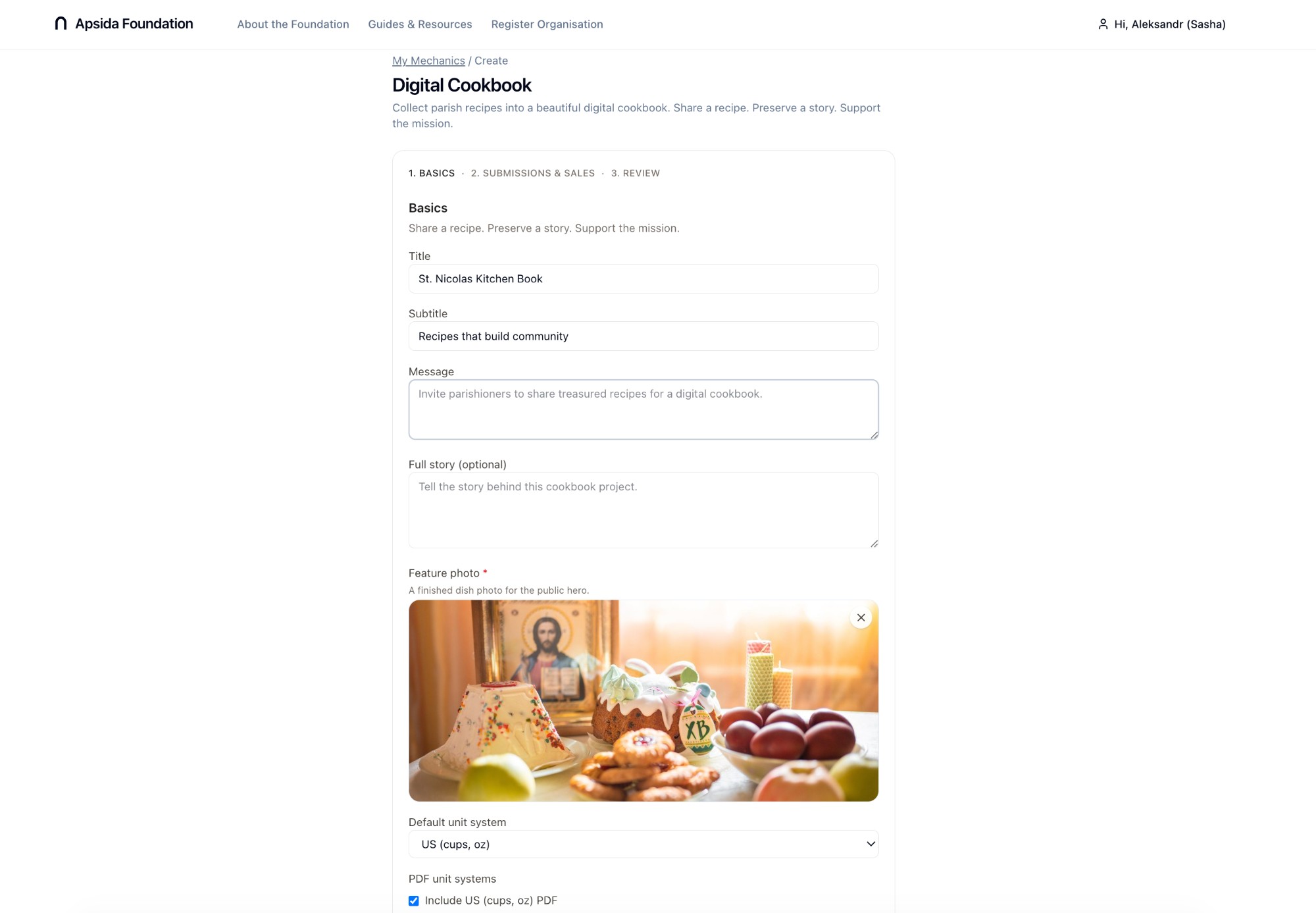
Opens the admin setup form. Sign in first if needed. An organization administrator creates Digital Cookbook from the campaign Mechanics tab; members then submit recipes from the public page or My Mechanics.
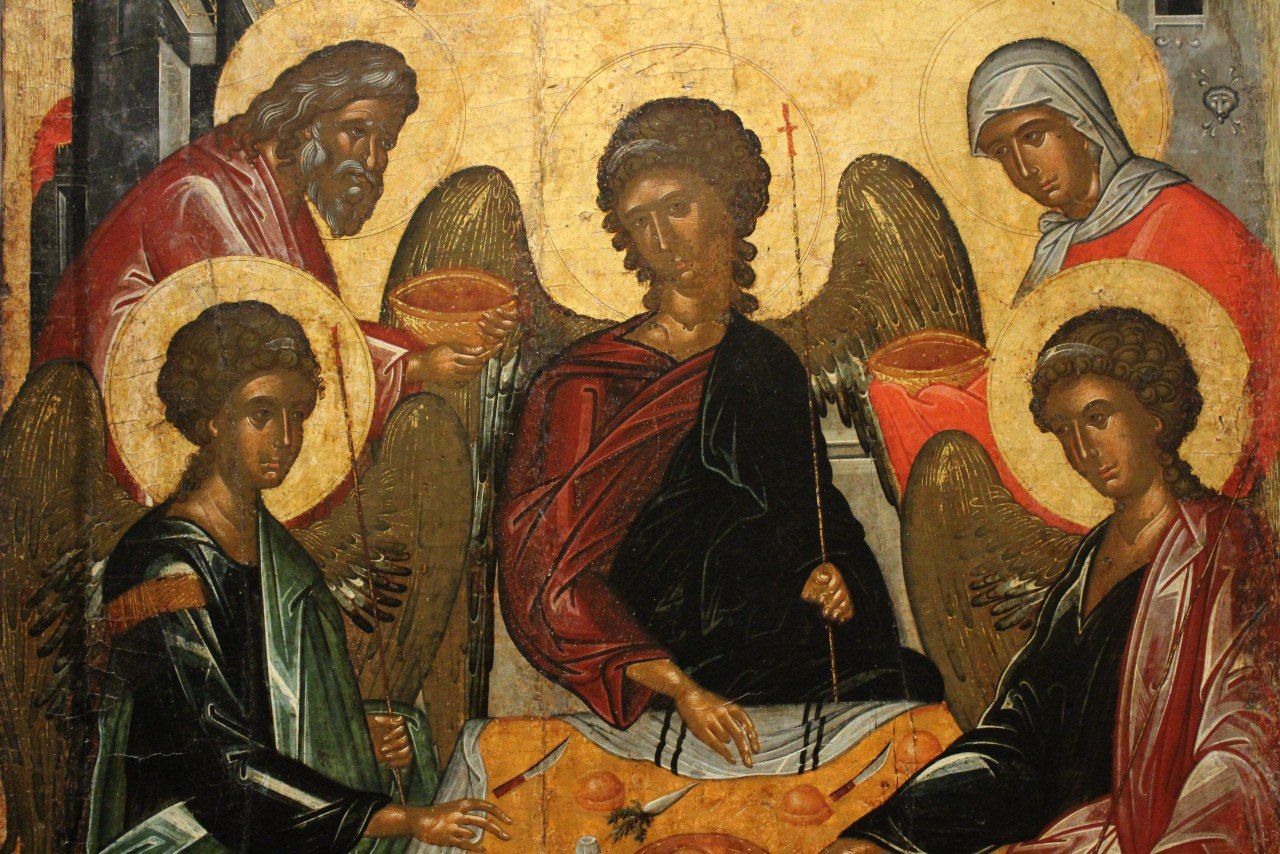
Share the Recipes That Made Your Parish a Family
“And they, continuing daily with one accord in the temple, and breaking bread from house to house, did eat their meat with gladness and singleness of heart.” — Acts 2:46
The first Christians prayed together, but their fellowship did not end when they left the place of worship. The Book of Acts tells us that they also gathered in one another’s homes and shared food “with gladness and singleness of heart.” The common table became a visible sign of a community united by faith, hospitality, and care.
A parish cookbook grows from the same human experience. It does not replace the sacred meaning of the Eucharistic assembly, nor does it confuse a parish meal with worship. Instead, it preserves the everyday hospitality that naturally flows from Christian life: the Pascha bread made from a grandmother’s recipe, the fasting soup served after Presanctified Liturgy, the pastries brought to the parish festival, and the dish everyone hopes to find at coffee hour.
With Digital Cookbook, those recipes can become more than treasured memories. Parishioners contribute their dishes, stories, and photographs. An editor appointed by your parish or organization reviews the material, and the approved recipes are arranged into a professionally organized digital book. The finished PDF is then offered online, and the proceeds support your chosen project.
The principle is simple: many families share something small, and together they create something valuable. One recipe may be meaningful to one household. A hundred recipes can tell the story of an entire community—and help fund work that would be difficult for one family to accomplish alone.
What Is a Digital Cookbook?
A Digital Cookbook is a collaborative fundraising project created by your parish or organization. Members and invited contributors submit recipes through a structured online form. Each contribution may include a photograph of the completed dish, an introduction or family story, an unlimited number of ingredients, and as many preparation steps as necessary. A small photograph may also be attached to any individual step to demonstrate a technique, texture, or stage of preparation.
The organization reviews every submission before publication. The administrator may handle this work personally or appoint one or more parish members as editors. Whenever a new recipe is submitted, the administrator and assigned editors receive an in-platform notification and an email with a direct review link.
After the recipes have been approved, the system automatically produces the cookbook as a PDF. It can include a cover, a greeting from the rector or project leader, a table of contents, information about the fundraising project, recipe sections, page numbers, an alphabetical index, a public list of contributors, and acknowledgments. Every recipe begins on a new page. Longer entries continue naturally across additional pages.
The organization may use this automatically generated edition or upload a separately designed PDF. Once the book is published, supporters can purchase it for themselves or send it as a gift. After a successful payment, the buyer receives an email with secure access and is also taken to a page where the PDF can be downloaded immediately.
Why It Can Be an Effective Fundraiser
A Digital Cookbook offers something a general recipe website cannot: a personal connection to real people and a particular place. Buyers are not merely paying for instructions on how to make soup or bake a cake. They are preserving family memories, supporting friends whose recipes appear in the book, and helping a cause they can see.
Every contributor also becomes a natural ambassador. A person whose family recipe appears in the collection has a good reason to tell relatives, neighbors, coworkers, and friends. The campaign therefore begins with its own circle of advocates instead of waiting for an audience to appear after the book is finished.
The digital format keeps the project manageable. There is no inventory to store, no stack of unsold books in the parish hall, and no package to mail after every purchase. The same finished edition can continue supporting the campaign long after its release. A cookbook can also reach well beyond the parish. Local residents may be interested in regional dishes, immigrant traditions, fasting food, festival favorites, or recipes from different Orthodox cultures.
Ideas for a Strong Theme
A focused book is easier to explain and promote than a miscellaneous collection. A parish might create Our Parish Table, Recipes for the Fast and the Feast, From Our Grandmothers’ Kitchens, An Orthodox Table Across Many Lands, or Festival Favorites from Our Community.
The theme should fit both the identity of the parish and the people the campaign hopes to reach. A culturally diverse community may organize the book by country or region. A parish known for its annual festival might reveal the stories behind its most popular dishes. A Lenten collection can serve Orthodox readers far beyond one city. An anniversary edition can combine recipes with photographs and memories from different generations.
The best theme answers one short question: Why is this a book that only our community could make?
How Parishioners Submit Recipes
A contributor opens the public cookbook site and selects Share a Recipe. A signed-in member may also open My Mechanics → Digital Cookbook → Submit a Recipe. The recipe can be saved as a draft and completed over several sessions.
The contributor enters the dish name, category, number of servings, preparation and cooking time, and an optional family story or dedication. The author may add as many ingredients as the recipe requires.
Preparation instructions are added one step at a time. There is no fixed limit on the number of steps. The steps and ingredients can be rearranged before submission.
The contributor uploads a feature photograph of the completed dish and chooses whether the author’s name may appear publicly. Before submitting, the contributor confirms permission to publish the supplied text and images. A preview shows approximately how the recipe will appear in the book.
How Review and Editing Work
When a contributor selects , the recipe enters the editorial queue. The administrator and every assigned editor receive an in-platform notification and an email. An editor may correct formatting, standardize measurements, reorganize ingredients, adjust image placement, or ask the author for missing information.
Sample cookbook
Our Parish Table: Recipes, Memories, and Faith
Download the free sample PDF used as the design reference for live Digital Cookbooks: cover, welcome, about the project, a full table of contents with page numbers for every recipe, and one featured recipe (Plov) with step photos. The sample body stays short; full books include every approved recipe.
Preorders, Publication, and Purchase
A parish does not have to wait until the last recipe is edited before beginning promotion. With Pre-order enabled, supporters can reserve the book in advance. The public page clearly displays the planned publication date and the current number of approved recipes. Preorder customers receive confirmation immediately and the download link automatically when the final edition is released.
Before purchasing, visitors can download a free sample of the opening pages and browse the table of contents of approved recipes. They can then choose Buy cookbook, enter the required information, pick US or Metric when both editions are offered, and pay the minimum amount established by the organization. If Give More is enabled, the buyer may increase the amount to provide additional support.
After a successful purchase, the buyer is taken to a confirmation page with a Download PDF button. A delivery email is sent at the same time with a secure download link.
Bringing the Cookbook Beyond the Parish
Begin with parish members, but do not stop at the church door. Ask contributors to share the campaign with relatives and former parishioners. Invite neighbors to submit a recipe connected to the local community. Approach cultural associations, nearby Orthodox parishes, community centers, historical societies, food bloggers, independent groceries, and local restaurants whose traditions fit the book’s theme.
Use the public link in the parish bulletin, email newsletter, website, and social media. Place a printed announcement with a QR code in the parish hall and at community events where permission has been obtained. A short personal invitation is usually more effective than a general advertisement: “My grandmother’s recipe is in this book” gives people a reason to stop and look.
Promotion must remain truthful. State clearly whether the book is available now or offered as a preorder, what the minimum payment is, when access will be delivered, and which project receives the proceeds. Do not describe the full payment as tax-deductible when the buyer receives a product in return; your parish or organization should provide the applicable transaction information.
12 Ways to Make Your Digital Cookbook Succeed
Ready to begin?
Opens the admin setup form. Sign in first if needed. An organization administrator creates Digital Cookbook from the campaign Mechanics tab; members then submit recipes from the public page or My Mechanics.