Ticketed Event: Fill the Room and Fund the Mission
12 min read · 2026-09-05
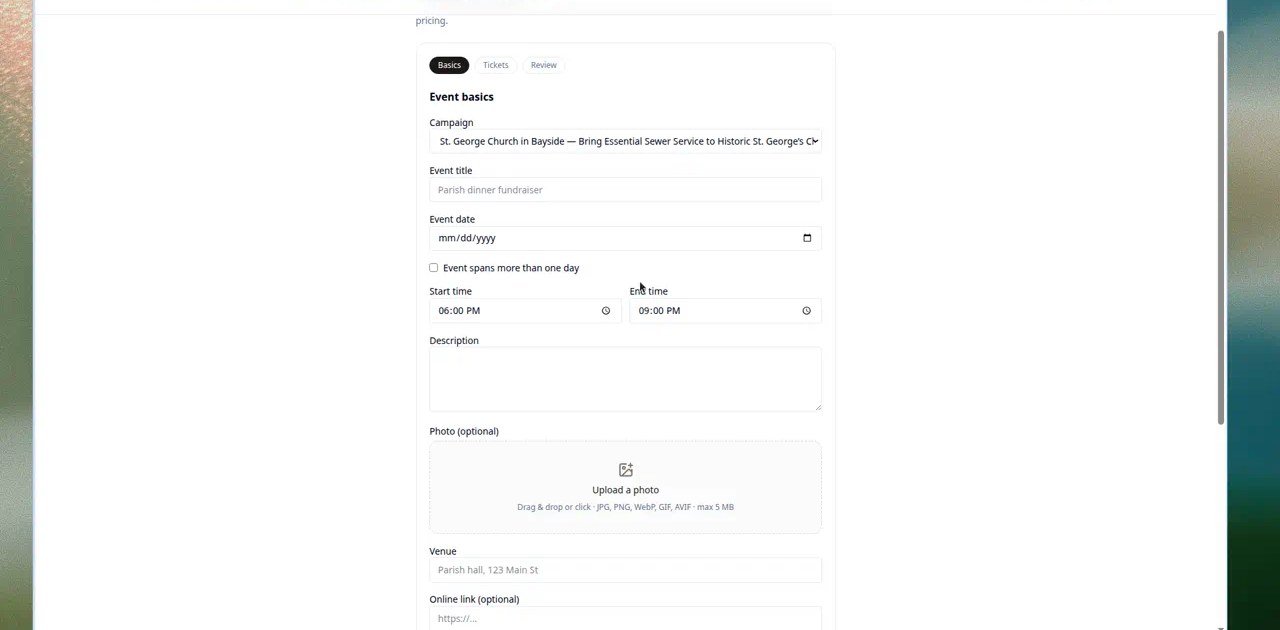
Opens the setup wizard. Sign in first if needed. Your organization must enable Ticketed Event for members under Campaign → Mechanics.
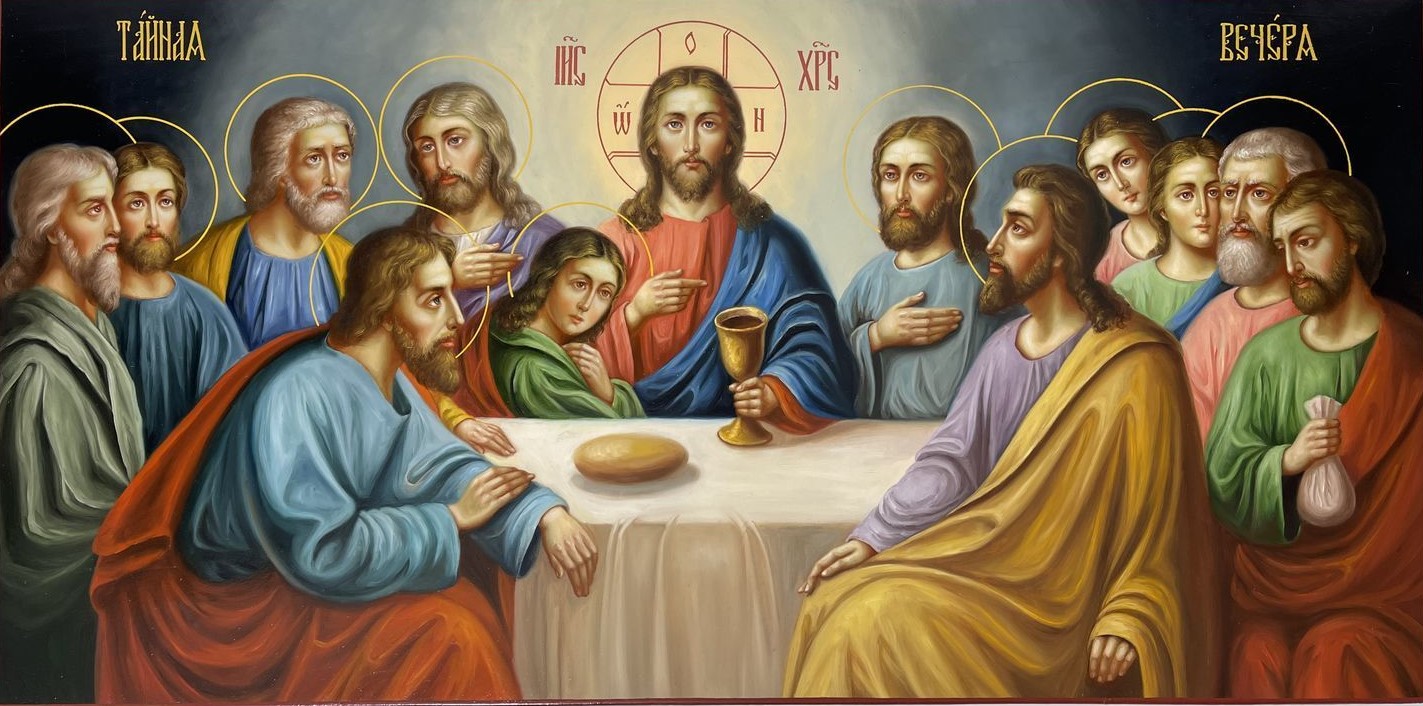
Fellowship Has Always Been Part of the Life of the Church
The Mystical Supper stands at the heart of Christian faith because Christ instituted the Holy Eucharist there. It should never be treated as an analogy for a commercial event or ticket sale. Yet Holy Scripture also shows another kind of Christian gathering: ordinary meals, fellowship, hospitality, and the sharing of material goods for the good of the community.
The Acts of the Apostles describes the first Christians in Jerusalem as a community united by prayer, common purpose, and care for one another. They gathered in the Temple, met in their homes, shared what they possessed, and provided for those in need. St. Luke writes that:
“They ate their food with gladness and simplicity of heart.” — Acts 2:46
Their common life was not limited to formal meetings. Faith was strengthened through personal fellowship, shared meals, generosity, and joyful hospitality. The Orthodox Church has preserved this understanding in parish meals, feast-day celebrations, festivals, lectures, concerts, and other gatherings that bring people together beyond the divine services.
A well-planned parish event continues this spirit of fellowship. It gives friends and brothers and sisters in Christ a reason to gather, welcomes neighbors who may rarely enter an Orthodox church, and helps support a worthy parish project.
A dinner can help repair a roof. A concert can help restore an icon. A lecture can support a new parish library. A children’s performance can help build a classroom.
The gathering has value in itself. At the same time, its proceeds can serve the mission of the Church.
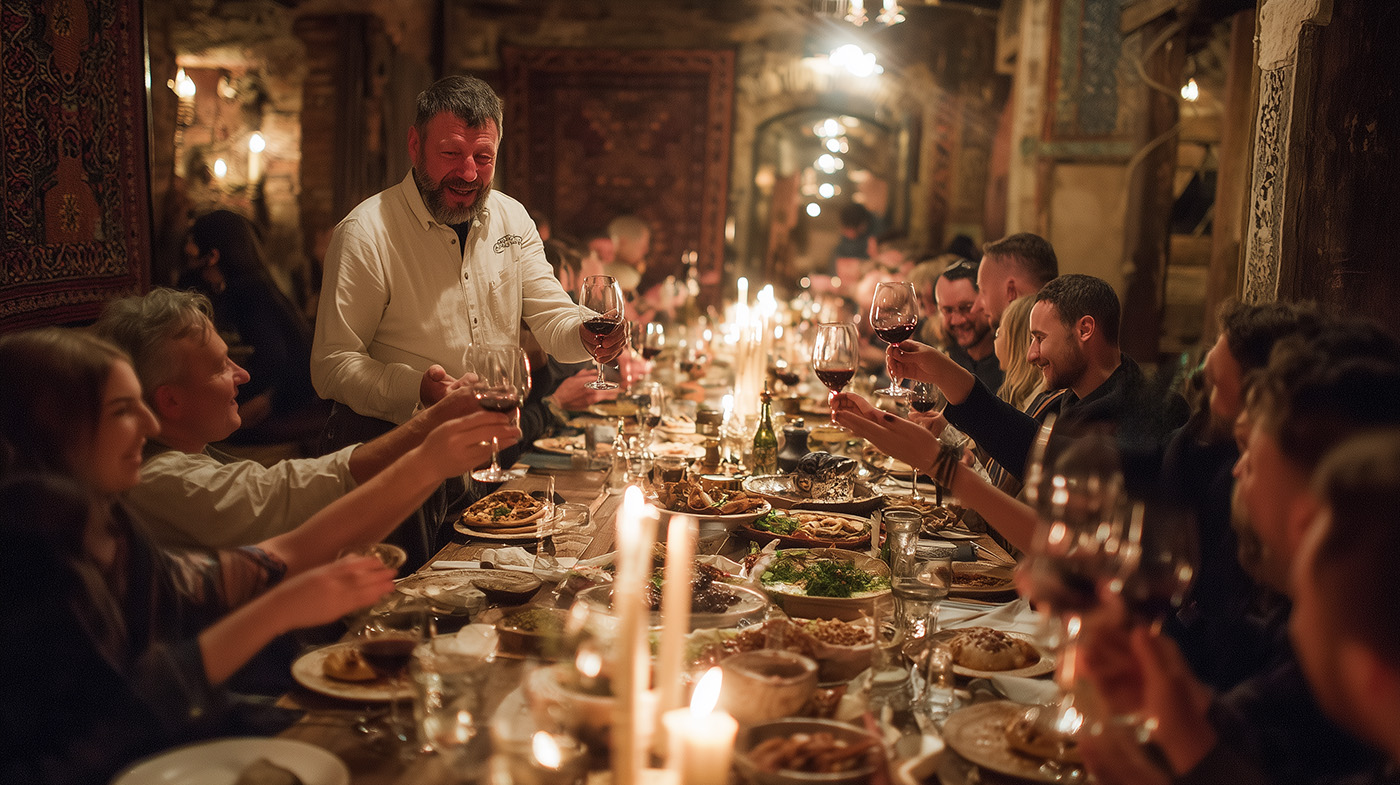
One Event Can Serve Several Purposes
A successful parish event can accomplish more than ticket sales alone.
It can strengthen relationships among parishioners. It can introduce the parish to neighbors. It can give children, musicians, speakers, cooks, artists, and volunteers a way to contribute their talents. It can also raise funds for a clearly defined campaign.
The event does not need to be an elaborate gala. Some of the most effective gatherings are simple, warm, and easy to describe.
A parish might organize:
- a community dinner or Sunday luncheon;
- a feast-day banquet;
- a home-style dinner hosted by a parish family;
- a sacred or classical music concert;
- a parish choir performance;
- a lecture on Orthodox faith, history, architecture, or iconography;
- a local-history presentation;
- a parish or children’s theatrical production;
- a documentary or film evening;
- a cultural festival or heritage night;
- a family trivia or quiz evening;
- an iconography, cooking, craft, or music workshop;
- a Christmas, Pascha, or seasonal bazaar;
- a youth talent evening;
- an architecture or preservation presentation;
- a community open house;
- a benefit reception for a specific parish project.
The best event has a clear identity. A person should be able to understand it in one sentence:
“A candlelit concert of Orthodox sacred music supporting the restoration of our church.”
“A Georgian dinner and cultural evening benefiting the new parish hall.”
“A family theater production raising funds for our children’s classrooms.”
Design Your Seating Map
You can compose a seating map for your parish event and sell tickets seat by seat. Build the map while creating the Ticketed Event. Guests then choose their chairs when they buy tickets.
Try the practice planner below. Round tables are already open so you can move seats, add furniture, renumber, and use Reset to restore the sample. This demonstration is for practice only and will not be saved.
Practice seating planner
Try it yourself. Switch between tables, theater rows, and free seats. Move furniture, renumber, and use Reset or Start over. Changes made here will not be saved — build the real map inside Ticketed Event creation.
You can design a seating map for your parish event and sell tickets seat by seat. Guests then pick their chairs at checkout.
Seats: 64
· Parish dinner (practice)What the Guest Experiences
The public event page serves as a complete mini-site. It presents the title, program, date, location, photographs, ticket choices, available seating, and the parish project supported by the proceeds.
The guest selects a ticket category. If the event has assigned seating, the guest chooses an available table or seat. If it uses general admission, the guest simply chooses the number of tickets.
The guest may enter a valid promotional code or add an optional donation. After payment is confirmed, the platform sends an email ticket containing:
- the event name;
- date and time;
- venue and address;
- ticket category;
- assigned table or seat, when applicable;
- order information;
- a unique ticket code or QR code;
- any instructions supplied by the organizer.
The guest does not need to print the ticket unless the parish requires it. The QR code can be displayed on a phone at the entrance.
Professional Check-In from a Phone
On the day of the event, an authorized organizer can open the ticket scanner on a smartphone.
The organizer scans each guest’s QR code and immediately sees whether the ticket is valid, which event it belongs to, which ticket category was purchased, and whether it has already been used.
The system marks the guest as checked in and records attendance. If the same ticket is presented again, the scanner can warn the organizer that it has already been redeemed.
The organizer can also locate a guest manually when the person cannot find the email or has difficulty opening the QR code.
This provides a professional entrance process without requiring a separate ticketing service. The parish can see how many tickets were sold, how many guests arrived, which seats remain open, and which ticket categories were most successful.

Why Ticketed Events Work
A ticketed event gives people something of genuine value: an evening, a meal, a performance, a lecture, a workshop, or a memorable community experience.
That makes it different from a general donation appeal. A guest may first purchase a ticket because the program sounds interesting. During the event, the guest encounters the parish, learns about the project, and may decide to offer additional support.
Events are especially effective for reaching beyond the parish directory. Music lovers may attend a concert. Families may come to a children’s performance. Local residents may be interested in a lecture about neighborhood history. A cultural dinner may attract people who have never attended an Orthodox service.
Hospitality opens the door. A clear fundraising purpose gives the gathering direction.
Twelve Ways to Make a Ticketed Event Successful
1. Create an event that can be described in one sentence
A clear promise is easier to remember and share. “Dinner and a lecture” is vague. “An Evening of Georgian Food and Orthodox Sacred Music” creates an image.
2. Choose one primary audience
Decide whether the event is mainly for families, neighbors, young adults, music lovers, preservation supporters, local historians, or the broader Orthodox community. Promotion becomes easier when the audience is clear.
3. Show exactly what the proceeds will support
Place the project purpose near the ticket choices. Guests should immediately understand whether their purchase supports a roof, classroom, accessibility project, restoration, or new construction.
4. Calculate the price from real costs
Include food, rentals, performers, licenses, printing, decorations, processing, complimentary tickets, and other expenses. A sold-out event that merely covers its costs will not advance the campaign.
5. Keep ticket categories simple
Three or four categories are usually enough. Adult, Child, Family, and Sponsor may cover most parish events. Too many choices slow checkout and complicate admission.
Ready to begin?
Opens the setup wizard. Sign in first if needed. Your organization must enable Ticketed Event for members under Campaign → Mechanics.