How to Launch a Successful Fundraising Campaign
Turn a real parish need into a common work that people can understand, trust, and support.
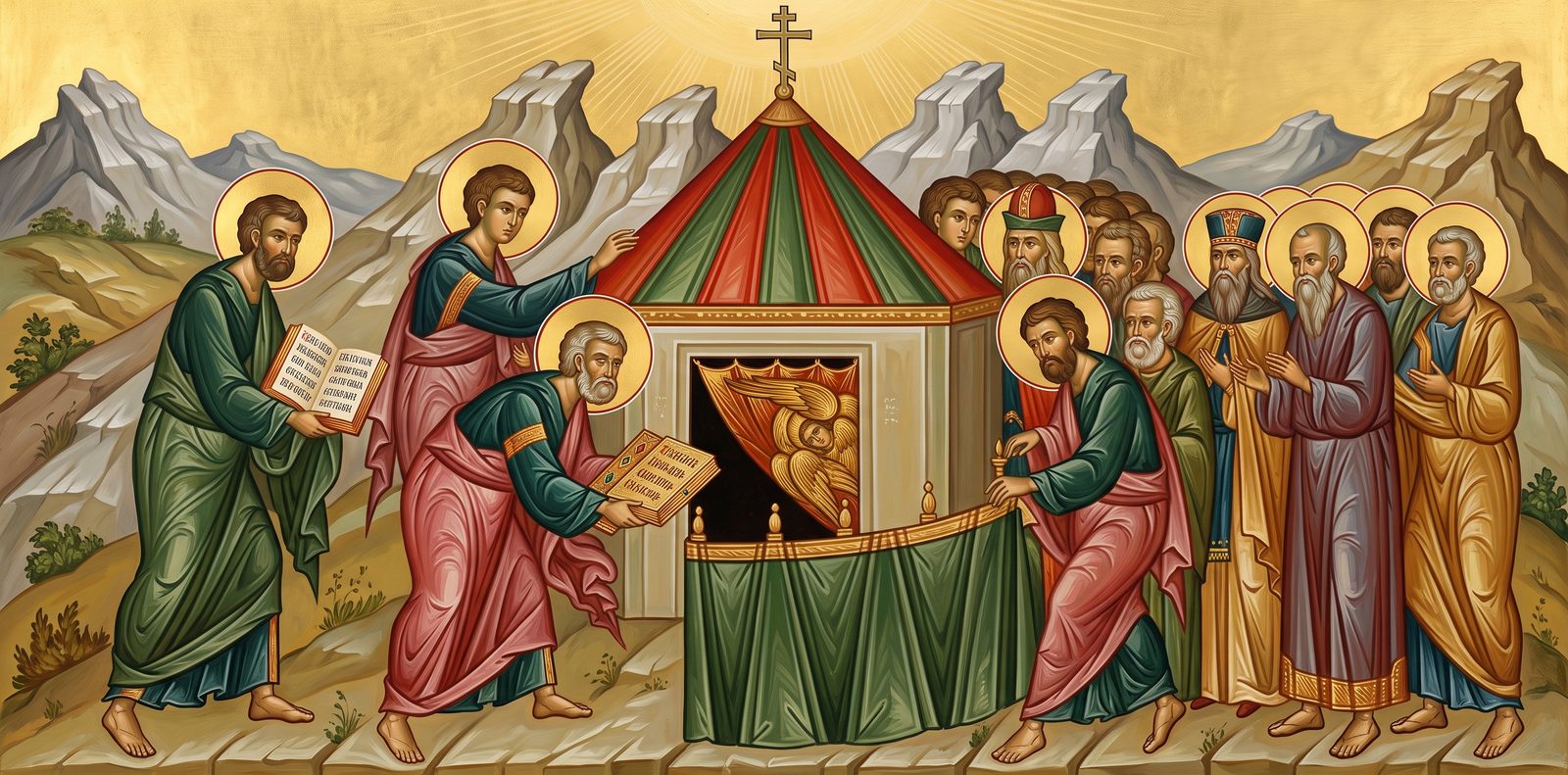
When the People Brought More Than Enough
One of Scripture’s most remarkable accounts of a common sacred undertaking appears in the Book of Exodus. When the Tabernacle was to be built, Moses did not ask one wealthy patron to provide everything. The whole people were invited to take part. Men and women brought gold, silver, bronze, cloth, wood, oil, precious stones, and the work of skilled hands. Scripture emphasizes that these were free offerings, brought by everyone “whose heart stirred him” and “whose spirit made him willing” (Exodus 35:21).
Then something extraordinary happened. The craftsmen reported that the people had brought more than the work required. Moses ordered an announcement throughout the camp: no more gifts were needed. “For the stuff they had was sufficient for all the work to make it, and too much” (Exodus 36:7).
This is a powerful biblical image of stewardship. The sacred work had a clear purpose. People gave voluntarily and according to their means. Craftsmen offered their abilities as well as materials. Trustworthy leaders accounted for what was needed. The result belonged not to one donor, but to the entire worshiping community.
Crowdfunding gives this familiar principle a modern form. One family may give $25, another $250, and a business may provide $5,000. Others share the appeal, organize an event, donate an item, or contribute skilled work. This is the practical meaning of raising “a little from many.” It allows a repaired roof, an accessible entrance, a chapel, or a parish classroom to become a common work that no household must carry alone.
Choose a Campaign People Can See and Understand
The strongest campaign is not always the largest. It is the one a person can understand in seconds and believe in after a few minutes.
Successful church appeals usually share five qualities: the need is specific; the result is visible; the amount is credible; trusted people stand behind it; and supporters receive evidence of progress. Urgent repairs work because the consequence of delay is plain. Restoration can reach beyond the congregation when it protects a landmark, sacred image, or piece of local history. Accessibility projects speak to dignity and welcome. New construction is easier to support when divided into attainable stages. Ministries, publications, choir recordings, cemeteries, and parish halls can also succeed when the campaign shows whom they will serve and what will change.
Compare “Please donate to our building fund” with “Help us raise $38,000 by November 1 to replace the leaking roof above the altar before winter.” The second appeal supplies a need, number, deadline, and result. It also suggests the right photographs, documents, updates, and giving levels.
For a large project, show the full cost but fund it through meaningful phases: design and permits; utilities and site work; foundations; enclosure; interior completion; iconography and furnishings. A donor is more likely to act when the next finish line is visible.
The most successful public campaigns also move beyond the parish directory. A historic church can matter to preservationists. A choir album can reach listeners far away. A community kitchen can matter to neighbors and businesses. Your parish may be the first audience, but it should rarely be the last.
What Apsida Foundation Does
Apsida Foundation is a fundraising platform for Orthodox churches, monasteries, schools, and related organizations in the United States. It provides professional public pages, direct payment processing, campaign management, donor communication, sharing tools, fundraising Mechanics, and acknowledgments when appropriate.
Apsida Foundation charges no platform fee and takes no commission from campaign donations.
Gifts are processed by a third-party payment provider and settled to the fundraiser’s own connected account. Apsida does not hold campaign funds in an intermediate wallet. The processor may charge a fee that varies by payment method, transaction details, volume, country, and approved nonprofit pricing. Stripe is available now; PayPal is planned. Apsida neither sets nor keeps processor fees. See How Donations Work.
Apsida Foundation is a project of Apsida Studio. Each quarter, the Studio contributes part of its own income to eligible projects fundraising through the Foundation and published on the platform. The Foundation also works to bring business donors to these projects. Its purpose is therefore larger than providing software: it connects worthy Orthodox work with a wider circle of people and institutions able to help.
Twelve Fundraising Mechanics
Apsida’s Mechanics turn one campaign into a continuing program of shareable activities. We have already opened seven ways to involve different circles of supporters, and we are preparing five additional opportunities that will become available soon.
Today, your parish can use Special Occasion to invite birthday, wedding, or anniversary gifts for the project. Giving Mosaic / 100 Envelopes Challenge divides a large goal into visible pieces and reveals an image as gifts arrive. Giving Chain encourages each donor to invite the next participants. Ticketed Event connects dinners, concerts, lectures, and workshops directly to the campaign. Marketplace/Garage Sale turns donated items into project funding. Digital Cookbook gathers parish recipes and memories into a book supporters can preorder. Help Day lets members offer useful services while buyers direct payment to the common purpose.
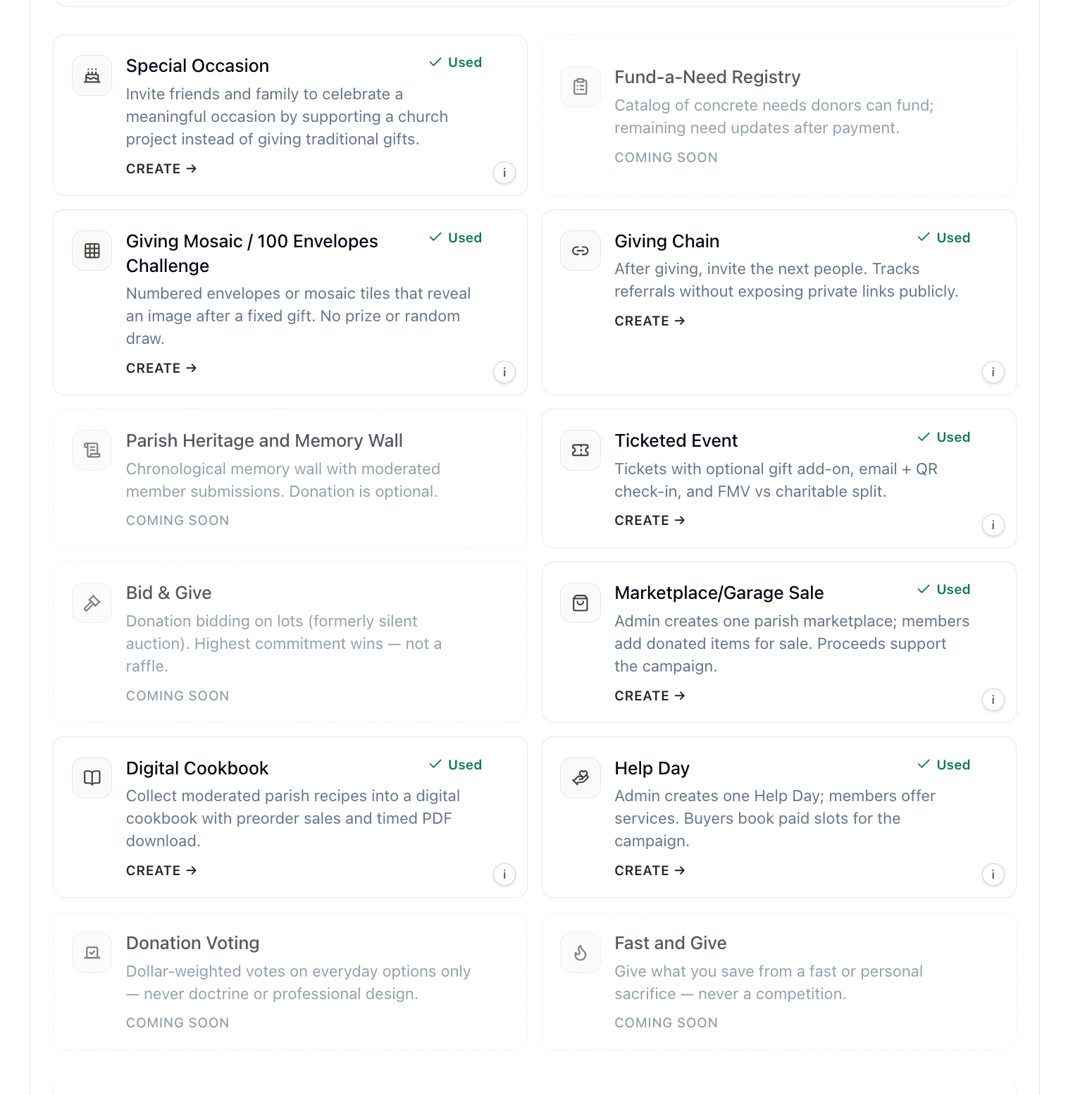
Soon we will open still more possibilities. Fund-a-Need Registry will let donors fund concrete project needs. Parish Heritage and Memory Wall will gather moderated memories into a shared chronology. Bid & Give will support charitable bidding without a raffle. Donation Voting will invite supporters to take part in carefully limited, non-doctrinal choices. Fast and Give will transform voluntary savings from a fast or personal sacrifice into an offering, never a competition.
One Mechanic each month can supply a fresh story, a new audience, and a reason for donors to return. Open Campaign → Mechanics to begin, and consult our Guides & Resources for practical instructions.
Twelve Practices That Build Trust
1. Complete your organization profile
Open the upper-right menu and choose Organization. Add a clean square logo, strong cover photograph, parish story, contacts, address, website, and social links. Apsida creates a shareable organization mini-site from this information. Openness builds trust.
2. Show evidence without burying the purpose
Attach plans, estimates, invoices, schedules, approvals, and progress photographs. Let documents confirm a clear story rather than overwhelm it.
3. Publish regular updates
Report meaningful progress every few weeks and at each milestone. Show what changed because people helped.
4. Use one Mechanic each month
Alternate formats. A dinner, Marketplace, and Special Occasion reach different circles and prevent the campaign from becoming the same repeated request.
5. Send proper acknowledgments
If eligible, open Organization and select Setup Tax-Deductible Donation Receipts. A receipt does not make a donor tax-exempt; it may document a charitable deduction. When a donor receives goods or services, disclose their fair market value and acknowledge only the potentially deductible portion as appropriate. Seek qualified tax advice for your circumstances.
6. Reach beyond the parish
Invite former parishioners, relatives, friends, coworkers, neighboring congregations, local residents, preservation groups, and businesses. A large project should not exhaust the same households.
7. Tell the story in many places
Approach Orthodox and local bloggers, diocesan media, community newspapers, radio, television, neighborhood groups, and friendly organizations. Give each partner a short text, strong image, and direct link.
8. Begin with early support
Ask parish leaders and committed members to make the first gifts before the public launch. Visible participation shows that the community believes in its own project.
9. Set a credible goal
Use real estimates. For a major undertaking, disclose the total while inviting donors to complete the next attainable stage. Never reduce the truth to improve the progress bar.
10. Give the campaign an accountable team
Assign the story, finances, replies, updates, announcements, and outside outreach. One named person should answer questions promptly.
11. Test everything on a phone
Check the public page, images, offerings, payment flow, confirmation email, links, and QR code as a donor would. Giving should not require solving a technical puzzle.
12. Thank people and show the result
Send prompt thanks and continue the relationship. Timely recognition and clear evidence of impact help donors return. Stewardship begins after the gift, not before it.
Begin with What Is in Your Hands
You do not need a wealthy parish, a development office, or one extraordinary benefactor. You need a truthful purpose, a credible plan, visible leadership, and the courage to invite people into the work.
The Tabernacle was not built by one benefactor. It rose from willing hearts, useful skills, precious possessions, and many gifts directed toward one sacred purpose. Your campaign begins in the same human place: with a real need, a willing community, and a first offering. Tell the story clearly. Show the work honestly. Make participation simple. Then give many people the opportunity to build something none of them must carry alone.